
How to Improve Indoor Air Quality in Your Apartment
In this guide
Apartments are snug by design, which is great for heating and cooling but not so great for air. Cooking smoke, cleaning sprays, pet dander and humidity have fewer places to go, so they tend to linger. The good news is that you don't need to renovate to breathe easier. Here's how to improve indoor air quality in an apartment with simple, renter-friendly steps.
Why apartment air gets stale
Indoor air problems usually come down to three things: sources that put pollutants into the air, not enough fresh air to dilute them, and moisture that feeds mold and dust mites. Apartments can be extra prone because units are tightly sealed, windows may be small or few, and you share walls, hallways and sometimes ductwork with neighbors.
The EPA's indoor air quality guidance boils it down to three strategies, in this order: control the sources, improve ventilation, then clean the air. The sections below follow the same approach.
Common culprits include:
- Smoke and fumes from cooking, especially on gas stoves
- Volatile organic compounds (VOCs) from cleaning products, air fresheners, paint and new furniture
- Smoke from candles, incense and tobacco
- Pet dander, dust and pollen
- Excess humidity and mold
Ventilate every day
Bringing in fresh air dilutes whatever is building up inside. Even a little helps.
- Open windows when outdoor air is good. Check your local air quality forecast first. On high-pollen, smoky or ozone-alert days, keep windows closed.
- Create a cross-breeze by opening windows on opposite sides of the unit for 10 to 15 minutes, or put a box fan in one window facing out to push stale air outside.
- Use your exhaust fans. Run the bathroom fan during showers and for a while afterward, and run the range hood every time you cook.
- Don't block vents. Furniture, rugs or curtains over supply and return vents choke airflow.
- Air out new stuff. New mattresses, furniture and rugs can release odors and VOCs for a while. Unwrap them in a ventilated room, or outside on a balcony if you can.
Keep humidity in the sweet spot
Humidity affects both comfort and health. Too much moisture encourages mold and dust mites; too little can dry out your skin and sinuses. The EPA recommends keeping indoor humidity between 30 and 50 percent, and ideally below 60 percent.
- Get a hygrometer. These small, inexpensive gauges show your humidity at a glance, so you're not guessing.
- Too humid? Run exhaust fans, keep the AC running in humid weather, avoid drying laundry indoors, and use a dehumidifier in damp rooms or closets.
- Too dry? A humidifier can help in winter. Clean it often according to the manufacturer's directions, and use distilled water if the instructions recommend it, since a dirty tank can spread bacteria and mold.
- Fix leaks fast. A dripping faucet, sweating pipe or slow leak under the sink keeps things damp. Report it to your landlord right away.
Upgrade your HVAC filter
Your heating and cooling system pulls air through a filter many times a day, so the filter is one of the easiest ways to catch dust, pollen and pet dander.
- Find out who handles filters. Some apartment complexes change them during routine maintenance; others expect you to. Your lease or the maintenance office can tell you.
- Check it monthly and replace it when it looks gray or clogged, often every one to three months. Pets, construction nearby or allergy season can mean more frequent changes.
- Know your MERV rating. Higher MERV filters capture smaller particles. A mid-range option, such as MERV 8 to 13, works for many home systems, but very dense filters can restrict airflow in some units. Ask maintenance what your system can handle before you go higher.
- Write the size down. It's printed on the edge of the old filter. Keep a spare on hand so you're never tempted to skip a change.
Rethink cooking and cleaning products
Cooking
Cooking is one of the biggest sources of indoor air pollution, whether you're searing, frying or just burning toast. Gas stoves also release combustion byproducts such as nitrogen dioxide.
- Turn on the range hood before you start cooking and leave it on for a few minutes after.
- Use the back burners when you can; hoods capture more from there.
- Many apartment hoods recirculate air instead of venting outdoors. If yours does, clean or replace its filter and crack a window while you cook.
- If you have gas appliances, make sure you have a working carbon monoxide alarm.
Cleaning and fragrance
- Choose simpler products. Fragrance-free or low-VOC cleaners reduce what you're breathing.
- Never mix bleach with ammonia or acids such as vinegar. These combinations create toxic gases.
- Ventilate while you clean, and follow label directions.
- Go easy on candles, incense and plug-in fresheners. They add particles and VOCs. If you love a good scent, our guide to scents for apartment wellness has ideas; just use them in moderation and with fresh air.
- Dust with a damp microfiber cloth and vacuum with a HEPA-filter vacuum so you trap dust instead of stirring it up. A regular apartment cleaning schedule makes this automatic.
- Leave shoes at the door to keep outdoor dirt and pollen from spreading through your home.
Choose the right air purifier
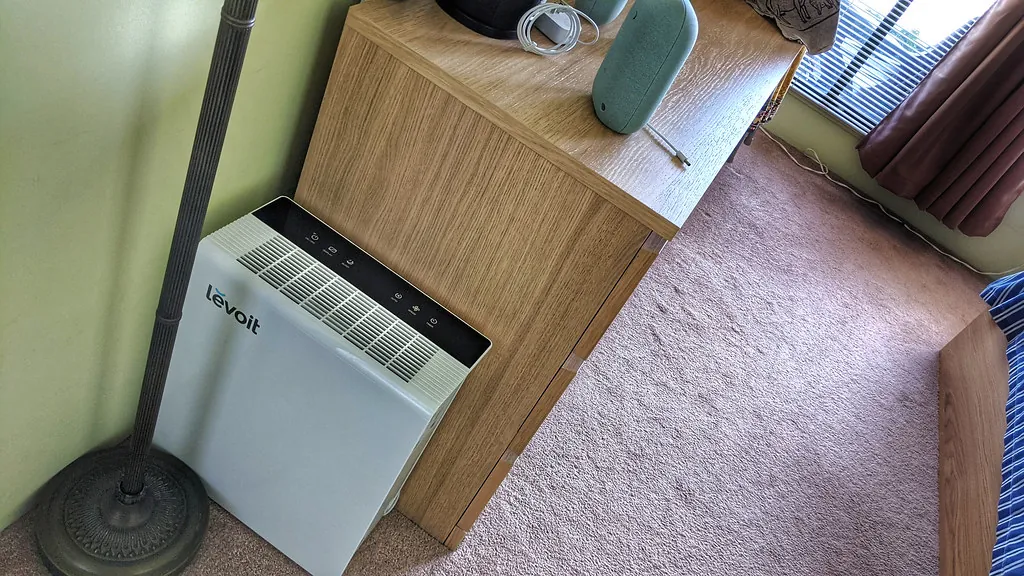
A portable air purifier with a true HEPA filter can reduce airborne particles like dust, pollen, pet dander and smoke. It won't fix a moisture problem or replace ventilation, but it can make a real difference in a bedroom or living room.
- Size it to the room. Look at the Clean Air Delivery Rate (CADR) and the room size the manufacturer recommends. A small unit in a big room won't keep up.
- Put it where you spend the most time, usually the bedroom, with space around it for airflow.
- Replace filters on schedule. A clogged filter does little good.
- Skip ozone generators. Some devices marketed as air purifiers intentionally produce ozone, which can irritate your lungs. The EPA advises against using them in occupied spaces.
- Want odor control? Look for a model that pairs HEPA with an activated carbon filter.
Spot and handle mold
Mold needs moisture to grow, so it shows up in bathrooms, under sinks, around windows with condensation, and anywhere there has been a leak. Signs include a musty smell, dark spots on caulk or walls, and peeling paint.
- Small spots on hard surfaces, like shower grout or a window sill, can usually be cleaned with detergent and water. Wear gloves and eye protection, and dry the area completely afterward.
- Larger areas (the EPA uses roughly 10 square feet as a guideline), mold inside walls or HVAC systems, or mold after flooding should be handled by professionals.
- Don't just paint over it. Mold under paint keeps growing.
- Tell your landlord in writing and include photos. The real fix is stopping the moisture source, such as a leak, poor ventilation or a failing seal, and that usually needs maintenance.
- Talk to a doctor if you notice symptoms like ongoing coughing, wheezing or allergy flare-ups at home, especially if you have asthma.
Frequently asked questions
What is the fastest way to improve indoor air quality?
Open windows for a cross-breeze when outdoor air is clean, run your exhaust fans, and stop using strong fragrances or harsh cleaners. Those steps cost nothing and help right away.
Do air purifiers really work?
A properly sized purifier with a true HEPA filter can reduce airborne particles such as dust, pollen, dander and smoke. It doesn't remove all gases or fix humidity, so pair it with ventilation and source control.
What humidity level should my apartment be?
Aim for 30 to 50 percent. A hygrometer will tell you where you stand, and a dehumidifier or humidifier can help you adjust.
Is my landlord responsible for mold?
Mold is often tied to leaks or building issues that are the landlord's job to repair. Report it in writing with photos, keep copies, and check your lease and local rules for details.
What's made the biggest difference to the air in your place? Share your tip in our Lifestyle community.
0 comments
No comments yet. Be the first to share your take.