
Water Damage Insurance Claim Tips: What to Do and What Gets Denied
In this guide
Water damage is one of the most common home insurance claims, and also one of the most misunderstood. Whether it is covered often comes down to where the water came from and how quickly it happened, not how bad the damage looks. Here is how to protect your home and your claim from the first hour on.
This is general information, not insurance or legal advice. Coverage depends on your specific policy and state, so read your policy wording and ask your insurer when in doubt.
Sudden vs. gradual: the distinction that decides most claims
Standard homeowners and renters policies are generally designed to cover sudden and accidental water damage. They generally exclude damage that develops gradually over time or comes from lack of maintenance.
| Often covered (sudden and accidental) | Often excluded or limited |
|---|---|
| A supply line under the sink bursts | A slow drip under the sink rots the cabinet over months |
| Water heater ruptures | Water heater corrodes and seeps for a long time |
| Washing machine hose splits | Repeated seepage around a worn toilet seal |
| Pipe freezes and bursts (if you took reasonable steps to keep heat on) | Mold from long-term humidity or an unrepaired leak |
| Wind-driven rain through a storm-damaged roof | Rain through an old roof with no storm damage |
Two other categories deserve special attention:
- Flood. Surface water, overflowing rivers, storm surge, and heavy rain that rises from the ground are generally excluded from standard homeowners and renters policies. Flood coverage is separate, available through the National Flood Insurance Program (NFIP) and private insurers. NFIP policies typically have a waiting period before they take effect, so you cannot usually buy one as a storm approaches. FloodSmart.gov explains how NFIP coverage works.
- Sewer and drain backup. Often excluded unless you have added a water backup endorsement. It is usually inexpensive and worth asking about.
The first hour: stop the water and stay safe
- Shut off the water at the fixture valve or the main shutoff. Know where your main is before you need it.
- Cut power to affected areas if water is near outlets, cords, or the electrical panel, and only if you can do it without standing in water. If in doubt, call an electrician or the utility.
- Get people and pets clear of sagging ceilings and slippery floors.
- Renters: tell your landlord or property manager right away. The building is their responsibility; your belongings are yours. See what renters insurance covers for how that split works.
Your duty to mitigate
Most policies require you to take reasonable steps to prevent further damage after a loss. Insurers may deny or reduce payment for damage that grew because nobody acted. "Reasonable" usually means things like:
- Stopping the source and removing standing water
- Moving belongings to a dry area
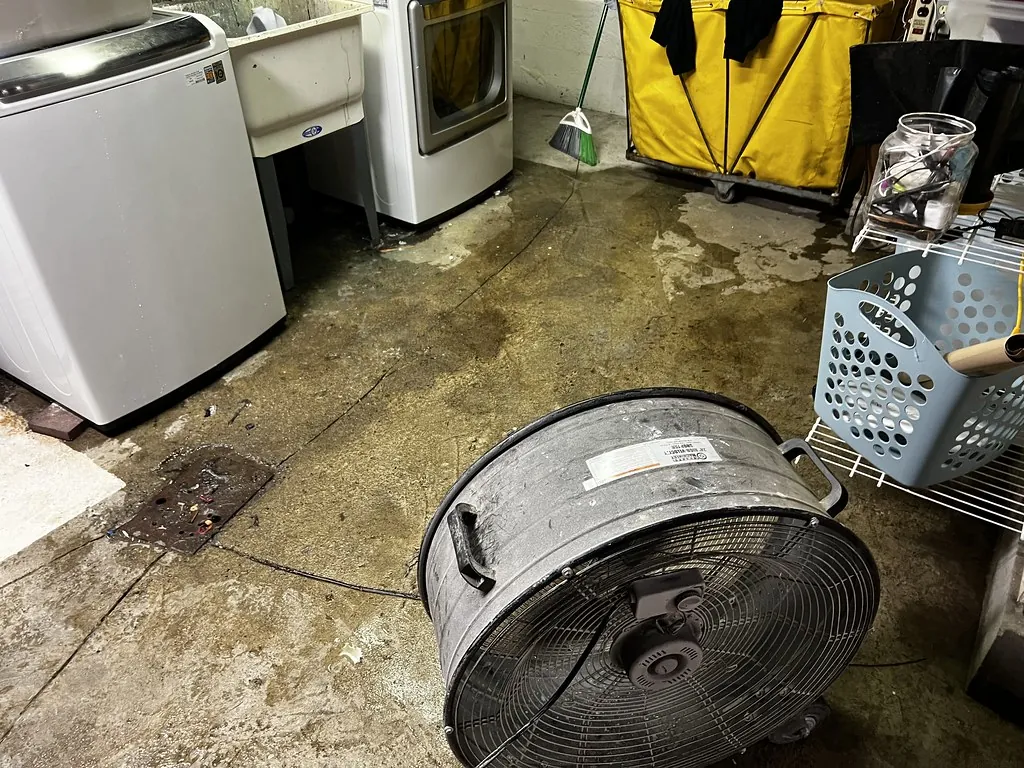
- Running fans and dehumidifiers
- Covering roof openings with a tarp, if it is safe to do so
- Calling a water mitigation company for larger losses
Reasonable emergency mitigation costs are often covered as part of the claim. Keep receipts for supplies, equipment rentals, and services. You generally do not need to wait for the adjuster to start mitigation, but avoid permanent repairs until the damage has been documented and your insurer has had a chance to inspect.
How to document water damage
Good documentation is the single best thing you can do for your claim. Start before you clean up whenever it is safe.
- Photograph and video everything: the source (the burst hose, the cracked pipe), standing water, water lines on walls, ceilings, flooring, and damaged belongings.
- Keep the failed part. A split supply line or ruptured valve can help show the damage was sudden. Store it somewhere safe and label it.
- Write a short timeline: when you discovered the water, what you did, who you called, and when.
- List damaged contents. A home inventory for insurance makes this much easier.
- Save moisture readings if a mitigation company takes them. Ask for copies of their drying logs and photos.
- Keep damaged items until the adjuster has seen them or approves disposal. If something must go for health reasons, such as soaked carpet pad, photograph it and keep a small sample if practical.
Drying out: why speed matters
Wet drywall, insulation, carpet pad, and wood framing can hold moisture long after surfaces feel dry. Lingering moisture can lead to mold, warped floors, and a bigger repair bill, and mold that results from delayed drying may not be covered.
- Open windows when outdoor air is drier than indoor air, and run fans and a dehumidifier.
- Pull up wet rugs and move furniture off wet carpet. Place foil or blocks under furniture legs.
- For anything beyond a small, clean-water spill, consider a professional mitigation company. They use moisture meters and commercial drying equipment to find hidden water.
- Treat water from sewage or outside flooding as contaminated. Avoid contact and leave cleanup to professionals.
If the water came with a storm and the power went out, our guide on what to do during a power outage covers safety basics.
Filing the claim step by step
- Read your policy sections on water damage, exclusions, and your duties after a loss.
- Report the claim promptly. Check your policy for notice and proof-of-loss deadlines; do not assume you have unlimited time.
- Write down your claim number and the name and contact details of your adjuster.
- Send your documentation: photos, timeline, contents list, and receipts. Keep copies of everything.
- Be present for the inspection and point out all affected areas, including closets, cabinets, and the ceiling below.
- Get your own repair estimate from a qualified contractor to compare with the insurer's estimate.
- Ask for explanations in writing if any part of the claim is denied, including the specific policy language relied on.
If you disagree with the result
Disagreements often center on the cause of damage (sudden or gradual) or the cost of repairs. You have options:
- Ask the adjuster to walk you through how the estimate was calculated, line by line.
- Provide additional evidence, such as a plumber's written opinion on what failed and when.
- If the dispute is about the amount of loss, your policy may have an appraisal clause. Our insurance appraisal tips explain how it works.
- A licensed public adjuster can represent you on the claim, and an attorney can advise on coverage disputes. See how public adjusters help with insurance claims.
- Your state insurance department can answer questions and accept complaints.
Frequently asked questions
Does homeowners insurance cover a slow leak?
Usually not. Damage from a leak that continued over time is commonly excluded as gradual damage or lack of maintenance. The cost to repair the leaking pipe itself is often not covered either, even when the resulting sudden damage is.
Is flood damage covered by my homeowners or renters policy?
Standard homeowners and renters policies generally exclude flood. You would need a separate flood policy, such as one through the NFIP.
Should I hire a water mitigation company before the adjuster comes?
For significant water, prompt drying is usually part of your duty to mitigate. Let your insurer know, keep all invoices, and document the damage before work begins.
Will mold be covered?
It depends on the policy. Mold caused by a covered sudden loss may be covered, sometimes with a lower limit. Mold from long-term moisture is often excluded.
Water claims come in every shape, and other members may have dealt with exactly what you are facing. Share your experience or ask a question in our Insurance Claims community.
0 comments
No comments yet. Be the first to share your take.